Best Coffee Makers and Tea Makers for a Lectin-Free Kitchen (2026)
Affiliate disclosure: My Lectin Free Lunchbox may earn a commission from qualifying purchases, including as an Amazon Associate, at no extra cost to you.
This article is for informational purposes only and is not medical advice. Talk with your clinician before changing your diet, especially if you have a diagnosed condition, high cholesterol, or take medication.
Good news for coffee and tea lovers following a Dr. Gundry–inspired, lectin-aware way of eating: coffee and tea themselves are generally welcome. Dr. Gundry talks often about coffee as a source of polyphenols, and Harvard’s Nutrition Source notes that coffee contains polyphenols such as chlorogenic acid. Where people tend to get stuck is the gear — pod machines full of plastic parts, kettles with plastic water windows, and sugary café drinks. This guide focuses on simple glass, ceramic and stainless brewers and kettles that keep your morning cup clean and easy.
I have not run a side-by-side lab test of every brewer below. Product details come from live Amazon listings checked on November 10, 2026, and the brewing notes are based on how each method works. Our own channel has a short video on making frothy French press coffee, which is embedded below.
Watch: French press coffee, plus brewing methods compared
Quick picks: best coffee makers and tea makers for a lectin-free kitchen
| Pick | Best for | Main materials | Link |
|---|---|---|---|
| Bodum Chambord French Press (17 oz) | Best French press | Borosilicate glass + stainless frame | Check price on Amazon |
| Chemex Classic 6-Cup | Best paper-filtered pour-over | Non-porous borosilicate glass | Check price on Amazon |
| Hario V60 Pour Over Kit | Best pour-over starter kit | Ceramic dripper + glass server | Check price on Amazon |
| AeroPress Original | Best for travel and single cups | Plastic body, paper micro-filters | Check price on Amazon |
| Cosori Glass Electric Kettle | Best budget kettle | Borosilicate glass, no plastic water contact | Check price on Amazon |
| Fellow Stagg EKG Pro | Best temperature-control kettle | Stainless gooseneck kettle | Check price on Amazon |
| HIWARE Glass Teapot | Best for loose-leaf tea | Borosilicate glass + 18/10 steel infuser | Check price on Amazon |
Before you buy: filtered vs. unfiltered coffee
One detail matters more than brand. According to Harvard’s Nutrition Source, unfiltered coffee such as French press and Turkish coffee contains diterpenes (cafestol and kahweol) that can raise LDL cholesterol and triglycerides, while paper-filtered coffee removes most of them. That does not make a French press “bad” — many people love it — but if you are watching your cholesterol, a paper-filter method like the Chemex, V60 or AeroPress is the more conservative daily choice. Ask your clinician what makes sense for you.
1. Bodum Chambord French Press — best French press
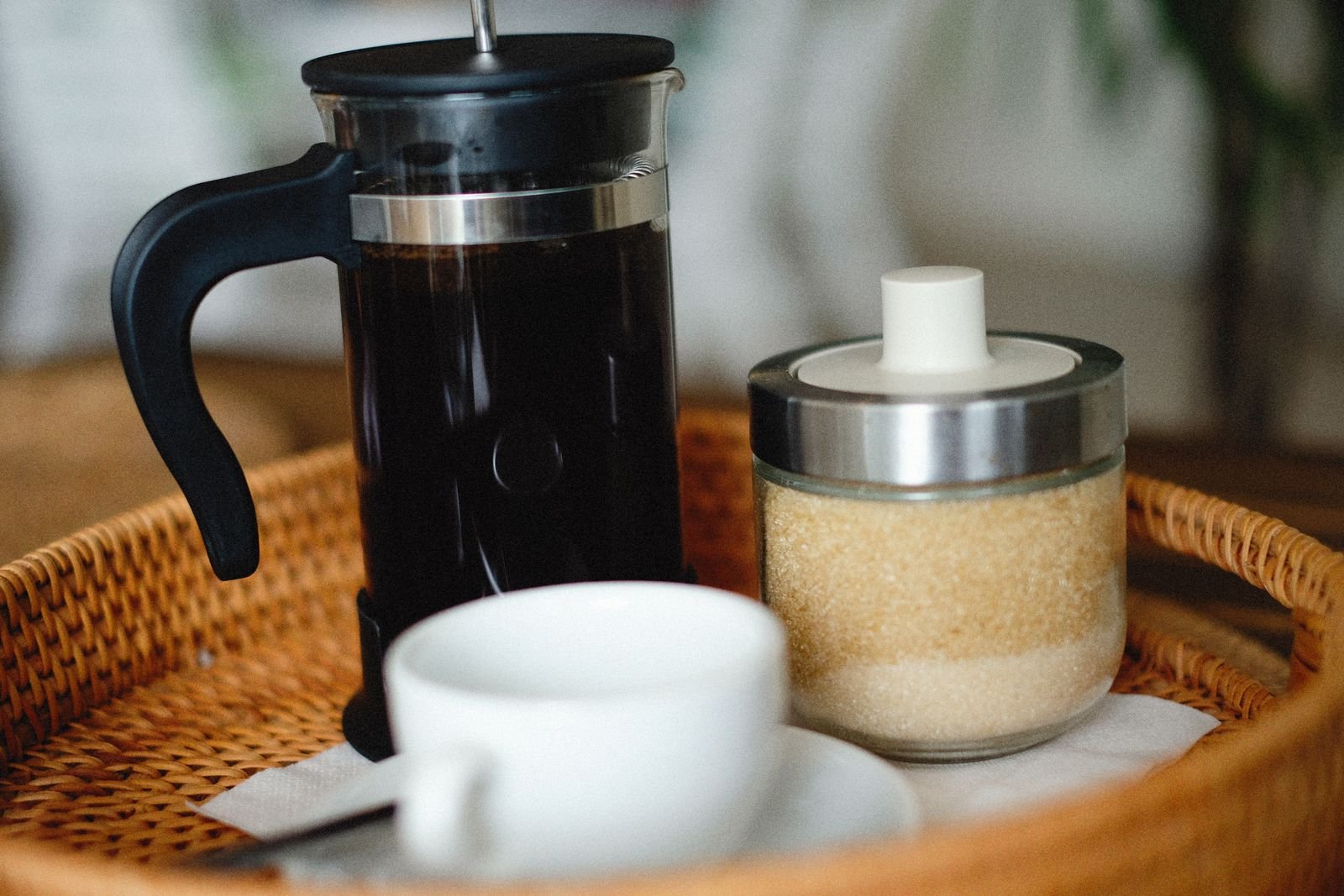
The Chambord is the classic French press design: a borosilicate glass beaker in a polished stainless-steel frame, made in Portugal. Hot coffee touches glass and steel mesh, not a plastic carafe. It makes a full-bodied cup with natural coffee oils, and it doubles as a loose-leaf tea brewer. If you like a frothy café-style cup, a French press is also one of the easiest ways to whip warm milk alternatives — the method we show in our own short video above.
Key specs (from the Amazon listing)
- 17-ounce (500 ml) capacity — about two mugs
- Heat-resistant borosilicate glass beaker
- Stainless-steel frame and reusable mesh filter
- Dishwasher-safe; manual, no power needed
Pros
- Simple, durable design that has been around for decades
- Glass and steel contact surfaces
- Brews coffee or tea; no paper filters to buy
Cons
- Unfiltered — keeps more cafestol than paper-filter methods
- Some fine sediment in the cup
- Glass beaker can break if dropped (replacement beakers are sold separately)
Best for: rich, full-bodied coffee for one or two people, and frothy café-style drinks. Stock looked limited on the 17 oz size when we checked, so you may see other sizes on the listing.
2. Chemex Classic 6-Cup — best paper-filtered brewer
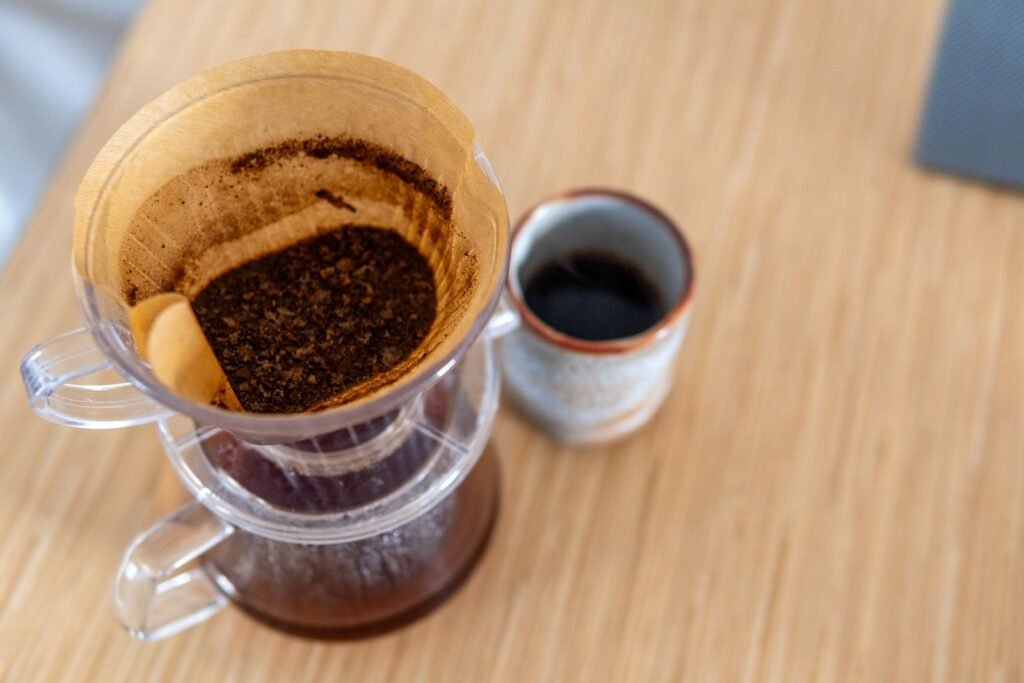
The Chemex is a one-piece hourglass made of non-porous borosilicate glass with a wood collar. Its thick bonded paper filters produce a very clean, bright cup and catch most of the oils that a French press lets through. It looks great on the counter and is easy to clean because there are no moving parts.
Key specs (from the Amazon listing)
- 6-cup size (Chemex measures 1 cup as 5 oz)
- Non-porous borosilicate glass that will not absorb odors or chemical residues
- Uses Chemex bonded filters (FP-1, FC-100, FS-100, FSU-100) — filters not included
- Brewed coffee can be covered and refrigerated for reheating, per Chemex
Pros
- Paper filter removes most diterpenes
- All-glass brewing surface
- Makes enough for a household
Cons
- Needs Chemex-specific filters (ongoing cost)
- Pour-over takes a few minutes of attention
- Glass can break; the narrow neck makes hand-washing slower
Best for: households that want clean, filtered coffee without plastic parts.
3. Hario V60 Pour Over Kit — best pour-over starter set
Hario’s V60 is the cone dripper a lot of specialty cafés use. This kit bundles a ceramic 02 dripper, a heatproof glass range server with a glass handle, a silicone-and-glass lid that doubles as a dripper stand, and 100 paper filters — everything you need except coffee and a kettle.
Key specs (from the Amazon listing)
- Ceramic V60 02 dripper (dishwasher safe) with spiral ridges
- Glass range server holds up to about 4 cups; glass handle, not plastic
- Silicone and glass lid that also works as a dripper stand
- Includes 100 V60 02 paper filters
Pros
- Complete kit in one box
- Ceramic and glass contact surfaces
- Paper-filtered cup; very adjustable flavor
Cons
- Learning curve — pour speed matters
- Works best with a gooseneck kettle
- Ceramic dripper can chip
Best for: coffee lovers who enjoy a slow morning ritual and want café-style control.
4. AeroPress Original — best for travel and single cups
The AeroPress is a compact plunger brewer that uses air pressure and paper micro-filters to make a smooth single cup in about two minutes. It is the most portable pick here and is popular with travelers and office workers. The honest trade-off for a lectin-free, low-plastic kitchen: the brewer itself is plastic. If that bothers you, choose glass; if convenience matters more, it is a very good brewer.
Key specs (from the Amazon listing)
- Single-cup brewer, about 10 oz capacity
- Combines immersion and pressure; brew in about 2 minutes
- Includes 50 paper micro-filters
- Compact and travel-friendly; can make cold brew and espresso-style concentrate
Pros
- Paper-filtered, smooth cup
- Fast cleanup — pop out the puck and rinse
- Great for travel, camping and the office
Cons
- Plastic brewing chamber
- One cup at a time
- Paper filters are an ongoing (small) cost
Best for: one-cup households and travel.
5. Cosori Glass Electric Kettle — best budget kettle
Many cheap kettles have plastic interiors or plastic water windows. Cosori’s glass kettle is designed so that water never touches plastic, according to the listing — a nice match if you are trying to limit plastic contact with hot liquids. It heats faster than a stovetop kettle and shuts itself off.
Key specs (from the Amazon listing)
- 1.7 L capacity; borosilicate glass; 1500W
- “No plastic contact with water” design
- Heats 0.5 L (2 cups) in under 3 minutes
- Auto shut-off and boil-dry protection; wide mouth for cleaning
Pros
- Affordable
- Glass lets you see scale buildup so you know when to descale
- Great all-round kettle for tea, pour-over and French press
Cons
- No variable temperature control
- Standard spout — less precise for pour-over than a gooseneck
- Glass shows hard-water spots quickly
Best for: everyday tea and French press on a budget. If you want to learn more about plastic chemicals like BPA, the NIEHS BPA page is a good, measured overview.
6. Fellow Stagg EKG Pro — best temperature-control kettle
If you brew pour-over or delicate green and white teas, temperature control is the upgrade you will notice most. The Stagg EKG Pro is a gooseneck electric kettle with to-the-degree temperature control, a hold mode, a brew stopwatch and scheduling. Green tea at 180°F and pour-over at about 205°F take one button press.
Key specs (from the Amazon listing)
- 0.9 L gooseneck electric kettle
- To-the-degree temperature control with hold mode
- Full-color display with Guide Mode presets, brew stopwatch and boil scheduling
- Altitude, chime and unit settings; listed model shown with walnut handle
Pros
- Precise temperature for coffee and tea
- Slow, controlled pour for pour-over
- Beautiful design that lives on the counter
Cons
- Expensive
- Smaller 0.9 L capacity
- More features than casual tea drinkers need
Best for: pour-over fans and serious tea drinkers.
7. HIWARE Glass Teapot with Infuser — best for loose-leaf tea
Loose-leaf tea skips paper bags and lets you see exactly what you are brewing. The HIWARE teapot is hand-crafted borosilicate glass with a removable 18/10 stainless-steel mesh infuser. It is stovetop-safe on gas or electric burners and even microwave-safe, so you can heat and steep in the same pot.
Key specs (from the Amazon listing)
- 1000 ml capacity
- Borosilicate glass body; removable 18/10 stainless-steel infuser
- Stovetop safe (gas or electric, medium heat) and microwave safe
- Dishwasher safe on the top rack
Pros
- Glass and stainless only
- Works as a kettle and a teapot
- Affordable
Cons
- Slower than an electric kettle
- Handle and lid get hot on the stove
- Glass needs careful handling
Best for: green, black and herbal loose-leaf tea lovers.
Buyer’s guide: choosing coffee and tea gear for a lectin-free kitchen
1. Favor glass, ceramic and stainless contact surfaces
Lectins are not the issue with coffee gear — the beans and tea leaves are generally fine on a Plant Paradox–style plan. The bigger choice is what touches your hot water. Glass, ceramic and stainless steel are inert and easy to clean. If you use plastic, look for BPA-free parts and replace worn or scratched pieces.
2. Pick filtered or unfiltered on purpose
Paper filters (Chemex, V60, AeroPress) remove most diterpenes; French press and other unfiltered methods keep them. If you have high LDL cholesterol, filtered coffee is the conservative choice. If you enjoy a French press, that is a conversation to have with your clinician, not a rule.
3. Watch what goes in the cup
Dr. Gundry frequently warns against sugary syrups and conventional dairy creamers. Black coffee, unsweetened almond or coconut milk, or a frothy café drink made with approved milks keeps the cup aligned with the plan. See our guide to lectin-free almond milk brands for ideas.
4. Kettle features to look for
Auto shut-off and boil-dry protection are must-haves. Variable temperature matters for green tea and pour-over. A gooseneck spout matters only if you brew pour-over.
5. Start with the beans
The best brewer cannot fix stale or low-quality coffee. Buy fresh, whole or recently ground beans and store them airtight. Our companion guide covers the best coffee for a lectin-free diet, including low-mold and organic options.
Coffee and tea makers FAQ
Is coffee allowed on a lectin-free diet?
Generally yes. Coffee beans are not a major lectin source, and Dr. Gundry speaks positively about coffee’s polyphenols. The bigger concerns are additives — sugar, flavored syrups and conventional dairy creamers.
Is French press coffee unhealthy?
Not necessarily. Unfiltered coffee contains diterpenes that can raise LDL cholesterol in some people, according to Harvard’s Nutrition Source. If cholesterol is a concern for you, paper-filtered methods are a safer daily habit.
Are pod coffee makers OK?
They are convenient, but they push hot water through plastic pods and internal plastic tubing, and pod coffee is often less fresh. Many lectin-aware households prefer the simple glass-and-steel methods above.
What is the best kettle for tea?
For most people, a glass electric kettle like the Cosori. If you drink a lot of green or white tea, a temperature-control kettle such as the Fellow Stagg EKG Pro helps avoid bitter, over-hot water.
Do I need a gooseneck kettle for pour-over?
It helps a lot. You can make pour-over with a standard kettle, but a gooseneck makes it easier to pour slowly and evenly.
Did you test all of these brewers?
No. This is a buyer’s guide built from product listings and how each brewing method works. Our own hands-on content is limited to the French press video on our channel.
Final recommendation
For most lectin-aware kitchens, a Chemex or Hario V60 paired with a Cosori glass kettle is the cleanest, simplest setup: glass and ceramic contact surfaces and a paper-filtered cup. If you love rich, frothy coffee, the Bodum Chambord French press is a classic — just be aware of the filtered-vs-unfiltered trade-off. Travelers should grab an AeroPress, tea lovers a HIWARE glass teapot, and pour-over perfectionists the Fellow Stagg EKG Pro.
More lectin-aware kitchen guides: best Instant Pot accessories, best pressure cookers for lectins, and best yogurt makers for goat milk yogurt.