Best Lectin-Free Nut Butters (2026): 6 Gundry-Friendly Spreads to Replace Peanut Butter
Affiliate disclosure: My Lectin Free Lunchbox may earn a commission from qualifying purchases, including as an Amazon Associate, at no extra cost to you.
This article is for informational purposes only and is not medical advice. Talk with your clinician before making big changes to your diet, especially if you have a tree nut or sesame allergy, are managing a chronic condition, or are watching calories.
Peanut butter is the default spread in most American kitchens, and it is one of the first things Dr. Steven Gundry asks people to drop. Peanuts are legumes, not nuts, and they sit on his “no” list along with cashews. That leaves a lot of people staring at the nut-butter shelf wondering what is left. The answer is: quite a bit. Walnut, pistachio, macadamia, hazelnut and sesame (tahini) all appear on his yes list, and almond butter can work if it is made from peeled almonds.
The catch is the label. Many “natural” jars quietly add cashews, peanuts, sunflower seeds, sugar or extra oils. For example, a popular raw walnut butter we looked at while researching this guide is actually walnut butter with cashews. So we built this list around single-ingredient or near-single-ingredient jars, and we point out every compromise.
How we picked: we compared six nut and seed butters that were listed and in stock on Amazon when we checked on November 16, 2026, and checked each ingredient list against Dr. Gundry’s Energy Paradox Yes/No food list. We have not taste-tested these jars for this review. Ingredients come from the live Amazon listings (and, for Barney Butter, the brand’s own product page). Recipes change, so read the jar before you buy. Looking for something to spread them on? See our lectin-free bread guide and lectin-free snacks.
Watch the Quick Video Guide
Quick picks: best lectin-free nut butters
| Product | Main ingredient | Listed ingredients, in short | Watch-outs | Link |
|---|---|---|---|---|
| Barney Butter Bare Smooth | Peeled (blanched) almonds | Blanched roasted almonds, palm fruit oil | Added palm fruit oil; almonds still bother some people | Check price on Amazon |
| Nutty Gourmet Organic Walnut Butter | Walnuts | Organic walnuts | Raw walnut butter can taste a little bitter or astringent | Check price on Amazon |
| Wilderness Poets Organic Pistachio Butter | Pistachios | Organic raw pistachios | Small 8 oz jar | Check price on Amazon |
| Wilderness Poets Raw Macadamia Butter | Macadamias | 100% raw macadamia nuts | Very calorie-dense; small jar | Check price on Amazon |
| Vör Hazelnut Butter | Hazelnuts | Dry-roasted hazelnuts | Listing allergen info says it may contain peanuts | Check price on Amazon |
| Soom Organic Tahini | Sesame seeds | Organic sesame seeds | Savory flavor; sesame is a major allergen | Check price on Amazon |
What makes a nut butter “lectin-free”?
In Dr. Gundry’s framework, it comes down to which nut or seed is in the jar. His yes list includes walnuts, pistachios, macadamia nuts, hazelnuts, pecans, pili nuts, sesame seeds and tahini, and it says nut butters are fine, with this note: if you choose almond butter, it should preferably be made with peeled almonds, because almond skins contain lectins. Peanuts and cashews are on the no side. Sunflower seeds are another one he has cautioned against, which matters because sunflower seed butter is the usual “nut-free” swap.
In his nut-butter video below, he goes further and ranks a few. He calls walnut, pistachio, macadamia, hazelnut, tahini and pili nut butter good choices; he says some of his patients react to the lectin in pecans, so pecan butter falls lower on his list; and he calls peeled almond butter his “least favorite but okay” option, naming Barney as one peeled-almond brand. We followed that order loosely. We skipped pili nut butter because we could not confirm a stable, in-stock Amazon listing for it.
For balance: Harvard’s Nutrition Source notes that research on dietary lectins in humans is limited, and that most lectin concerns come from raw legumes. Separately, Harvard’s overview of nuts and heart health describes nuts as a source of unsaturated fats, fiber and other nutrients linked with heart health in observational research. Choosing these butters is a reasonable food swap; it is not a treatment.
Watch: Dr. Gundry ranks nut butters
In this Dr. Gundry Podcast episode he walks through the worst and best nut butters for his approach, plus label tips: avoid added sugars, unrelated added oils and soy blends, and keep opened jars cool because ground nuts can go rancid. It is a principles video, not a review of the specific jars below.
1. Barney Butter Bare Smooth: best peeled-almond butter
If you or your family simply want almond butter, this is the one Dr. Gundry named in his video as a peeled-almond option. Barney says it blanches almonds to remove the skins, which also gives it a smooth, grit-free texture. The Bare version has no added sugar or salt.
The compromise is the second ingredient. Barney’s own product page lists the ingredients as blanched roasted almonds and palm fruit oil, which is how it stays no-stir. Red palm oil is on Dr. Gundry’s yes list, but if you want almonds and nothing else, this is not that jar. And Dr. Gundry notes that some people, particularly with autoimmune issues, react to almonds even when peeled.
Key details (per the Amazon listing)
- Size: 10 oz jar
- Ingredients (per Barney): blanched roasted almonds, palm fruit oil
- No added sugar or salt
- Made in a peanut-free facility (per listing)
- Listing claims: non-GMO, glyphosate residue free certified, RSPO certified sustainable palm oil, keto, paleo, vegan, kosher
Pros
- Made from skin-free almonds
- No-stir, very spreadable texture
- Peanut-free facility
- Widely sold, easy to replace
Cons
- Contains added palm fruit oil
- Almonds are Dr. Gundry’s lowest-ranked of these options
- Roasted, not raw
Best for: Families who want a familiar almond butter, made from peeled almonds, as a direct swap for peanut butter.
2. Nutty Gourmet Organic Walnut Butter: best walnut butter
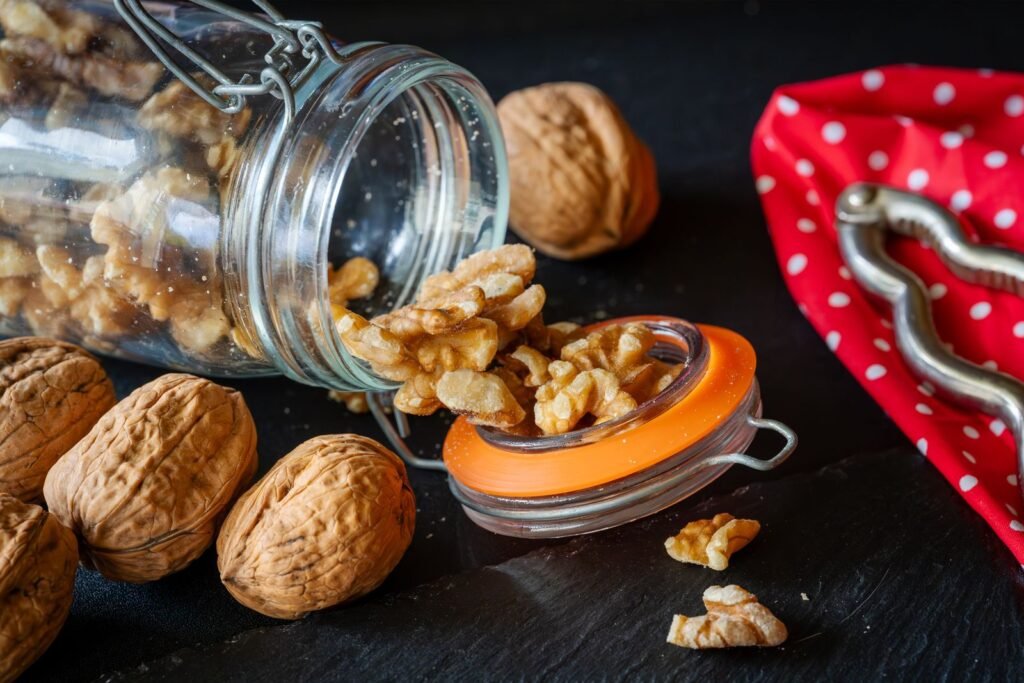
Walnuts are near the top of Dr. Gundry’s list, largely because of their plant omega-3 fat, alpha-linolenic acid (ALA), and polyphenols. The hard part is finding a walnut butter that is just walnuts. This Nutty Gourmet jar lists organic walnuts as the only ingredient, with no added sugar or salt.
Walnut butter is softer and a little more bitter than almond butter. Nutty Gourmet suggests chilling it in the refrigerator for a thicker texture. Because walnut oil is very unsaturated, cool storage also helps it stay fresh after opening.
Key details (per the Amazon listing)
- Size: 10 oz jar
- Ingredients: organic walnuts
- Raw, no added sugar, unsalted
- Certified kosher; made in a peanut-free facility (per listing)
Pros
- True single-ingredient walnut butter
- Organic, raw, unsalted
- Peanut-free facility
Cons
- Walnut flavor can taste astringent to some people
- Thinner texture; best kept cold
- Smaller brand, so stock can vary
Best for: Anyone who wants the nut Dr. Gundry ranks first, in a spread with nothing else added.
3. Wilderness Poets Organic Raw Pistachio Butter: best pistachio butter
A lot of “pistachio cream” on Amazon right now is a sweetened dessert spread made for Dubai-chocolate recipes. That is not what you want here. Wilderness Poets lists one ingredient, raw organic California-grown pistachios, ground at a low temperature in small batches in Oregon.
Pistachio butter is naturally green, a little sweet and great in sauces or stirred into goat or coconut yogurt. Dr. Gundry mentions his wife is a fan, and he points to pistachios’ fiber and the eye-health compounds lutein and zeaxanthin.
Key details (per the Amazon listing)
- Size: 8 oz glass jar
- Ingredients: organic raw pistachios
- USDA certified organic, vegan, gluten free, non-GMO, no preservatives (per listing)
- Made in Oregon, USA
Pros
- One ingredient, organic and raw
- Glass jar
- Not a sweetened pistachio “cream”
Cons
- Small 8 oz jar for the money
- Raw texture may be less smooth than roasted butters
Best for: Pistachio lovers who want a clean, unsweetened jar for spreading, sauces and yogurt bowls.
4. Wilderness Poets Raw Macadamia Nut Butter: best macadamia butter
Macadamias are mostly monounsaturated fat, the same family of fat found in olive oil, and they are one of Dr. Gundry’s personal favorites. This Wilderness Poets jar is 100% raw macadamia nuts with no salt or sugar, packed in glass.
It is rich and mild, with what the listing calls a light crunchiness. Dr. Gundry also notes that macadamias are high in calories, which he uses to help underweight patients gain. If you are watching calories, measure your spoonfuls. If this jar is out of stock, Vör also lists a single-ingredient dry-roasted macadamia butter on Amazon.
Key details (per the Amazon listing)
- Size: 8 oz glass jar
- Ingredients: 100% raw macadamia nuts
- Vegan, raw, non-GMO, preservative free, gluten free, no sugar, no salt (per listing)
- Made at low temperature in Oregon, USA
Pros
- Single ingredient
- Rich, mild flavor that works in sweet and savory recipes
- Glass jar
Cons
- Very calorie-dense
- Small jar; macadamia butter is typically pricey
- Raw texture can be slightly gritty
Best for: Anyone who wants a buttery, mild spread, and people who need calorie-dense healthy fats.
5. Vör Hazelnut Butter: best hazelnut butter (not a chocolate spread)
Hazelnut spread usually means sugar, palm oil and milk powder. Vör’s plain hazelnut butter is the opposite: one ingredient, dry-roasted hazelnuts from Oregon, with no added sugar, salt or palm oil, in BPA-free packaging. Dr. Gundry calls hazelnuts the European equivalent of almonds and highlights their folate and vitamin E.
One honest flag: the Amazon allergen line says it may contain peanuts, and Vör also makes peanut butter. If you avoid peanuts for allergy reasons, not just lectins, contact the company or choose another brand. Dastony also sells an organic raw hazelnut butter as a 3-pack.
Key details (per the Amazon listing)
- Size: 12 oz
- Ingredients: dry-roasted hazelnuts
- No added sugar or salt; no palm oil; soy-free, dairy-free, gluten-free
- Certified kosher; BPA-free packaging
- Allergen note on listing: may contain peanuts and tree nuts
Pros
- True single-ingredient hazelnut butter
- Roasted flavor many people like better than raw
- Bigger 12 oz jar
Cons
- Possible peanut cross-contact, per the listing
- Roasted, so not a raw food
Best for: Anyone who wants a hazelnut spread for toast or a homemade chocolate-hazelnut mix without the sugar.
6. Soom Organic Tahini: best seed butter and nut-free option
Tahini is sesame paste, and it is listed by name on Dr. Gundry’s yes list. In his video he notes that sesame and sunflower come from different plant families, and that sunflower seeds are the ones he avoids. That makes tahini the go-to swap for people who would otherwise reach for sunflower seed butter.
Soom’s organic tahini lists organic sesame seeds and nothing else. The listing says it is known for a silky, easy-to-mix texture, and it gives 6g of plant protein per serving. Use it in lemon-tahini dressing, drizzled on roasted vegetables, or sweetened with a little allulose or monk fruit as a dessert dip.
Key details (per the Amazon listing)
- Size: 16 oz (BPA-free plastic jar)
- Ingredients: organic sesame seeds
- USDA organic, kosher, gluten free, vegan, paleo (per listing)
- 6g plant protein per serving (per listing)
Pros
- Single ingredient and organic
- Smooth and easy to mix
- Nut-free, for households with tree nut allergies
Cons
- Savory, slightly bitter flavor is not peanut butter
- Sesame is a major allergen
- Plastic jar, not glass
Best for: Nut-free households, savory cooks, and anyone replacing sunflower seed butter.
Buyer’s guide: how to choose a lectin-free nut butter
Read the whole ingredient list
The best jars have one ingredient, two at most (salt is fine for most people). Watch for cashews, peanuts, soy, sunflower seeds or sunflower oil, and sweeteners like cane sugar, honey or coconut sugar. A “walnut butter” or “pecan butter” that includes cashews is common.
Almond butter: look for peeled, blanched or Marcona
Dr. Gundry’s list says almonds should be blanched or Marcona. Most almond butters, including many organic ones, are made with skin-on almonds. If the label does not say blanched, peeled or skin-free, assume the skins are in there.
Raw vs. roasted
Raw butters keep a milder, greener flavor and tend to be pricier. Roasted butters taste deeper and are often smoother. Both can fit a lectin-conscious plan; it is mostly a taste and budget choice.
Storage matters
Once opened, nut butters can go rancid, especially walnut. Keep jars cool and dark, and refrigerate walnut and raw butters. Natural oil separation is normal; stir it back in.
Portion size
Two tablespoons of most nut butters is close to 200 calories. Dr. Gundry’s yes list suggests about half a cup of nuts and seeds per day. Use a measuring spoon if you are watching your weight.
Need more ideas? Our lectin-free protein bars and lectin-free flours guides cover other pantry swaps, and our recommended foods list is a good starting point.
Lectin-free nut butter FAQ
Is peanut butter lectin-free?
No. Peanuts are legumes, and Dr. Gundry puts them on his no list. He also points to peanuts as a common source of aflatoxin contamination. Swap in one of the butters above.
Is almond butter lectin-free?
Only partly. Dr. Gundry’s list allows almonds if they are blanched or Marcona, because the skins contain lectins. Barney Butter Bare Smooth uses blanched, skin-free almonds; most other almond butters do not say so.
Is sunflower seed butter a good lectin-free choice?
Not in Dr. Gundry’s view. He has cautioned against sunflower seeds. Tahini is the seed butter he includes on his yes list.
What about cashew butter?
Cashews are on Dr. Gundry’s no list. Watch for them as a hidden second ingredient in walnut, pecan and “mixed nut” butters.
Which nut butter does Dr. Gundry like best?
In his podcast episode he speaks most warmly about walnut, pistachio, macadamia and hazelnut butters and tahini, and calls peeled almond butter his least favorite acceptable option.
Have you tasted these nut butters?
No. We have not taste-tested these specific jars for this review. Ingredient details come from the Amazon listings we checked on November 16, 2026, plus Barney Butter’s own product page.
Bottom line
You do not have to give up nut butter on a lectin-conscious diet; you just have to leave peanut and cashew behind and read labels closely. For the cleanest jars, start with Nutty Gourmet walnut butter, Wilderness Poets pistachio or macadamia butter, or Vör hazelnut butter. For a nut-free pantry, Soom tahini is the easy pick. If your family insists on almond, Barney Butter Bare Smooth uses peeled almonds, with a little palm fruit oil. And as always, this is general information, not medical advice.