Best Fermented Foods for Gut Health (2026): Lectin-Free Sauerkraut, Kimchi, Kefir and More
Affiliate disclosure: My Lectin Free Lunchbox may earn a commission from qualifying purchases, including as an Amazon Associate, at no extra cost to you.
This article is for informational purposes only and is not medical advice. Fermented foods can be high in sodium, and some people (including those who are immunocompromised, pregnant, on a low-histamine diet or managing a digestive condition) should talk with their clinician before adding them.
If you are eating the Dr. Gundry way, fermented foods are one of the easiest wins in the fridge. Raw sauerkraut and kimchi both appear on the vegetable side of Dr. Steven Gundry’s Energy Paradox Yes/No food list, along with miso, sugar-free vinegars and plain goat’s and sheep’s milk kefir. They add tang and crunch to plain meals, and they bring live cultures along for the ride.
There is also some good research behind the habit. In a 10-week Stanford clinical trial of 36 healthy adults, people who ate more fermented foods (yogurt, kefir, kimchi and other fermented vegetables, vegetable brine drinks and kombucha) saw their gut microbial diversity rise, and 19 inflammatory proteins in their blood went down, according to Stanford Medicine’s summary of the study. That was one small study in healthy people, so think “promising,” not “cure.” Harvard’s Nutrition Source likewise lists fermented foods such as kefir, sauerkraut and kimchi among the foods that may support a healthy microbiome.
How we picked: we looked for fermented foods that match Dr. Gundry’s yes list, are labeled raw, live or unpasteurized where that matters, and were listed on Amazon when we checked on November 18, 2026. Refrigerated jars are sold through Amazon’s grocery delivery, so availability depends on your ZIP code. We also added gear for making your own. We have not taste-tested these products for this review, and labels change, so always read the jar you buy.
Quick picks: best fermented foods for a lectin-free gut
| Pick | What it is | Why it fits | Watch for | Link |
|---|---|---|---|---|
| Wildbrine Organic Green Sauerkraut | Raw sauerkraut, 18 oz | Raw sauerkraut is on Dr. Gundry’s yes list; never pasteurized | Refrigerated; sodium | Check price on Amazon |
| Wise Goat Organics Classic Sauerkraut | Raw organic sauerkraut, 16 oz | Wild-fermented, no added sugar or vinegar | Small-batch brand | Check price on Amazon |
| Wildbrine Mild White Kimchi | Raw white turmeric kimchi, 18 oz | Kimchi is on his yes list; this one is mild, without the usual heat | Refrigerated | Check price on Amazon |
| Mother-in-Law’s Vegan Kimchi | Classic napa cabbage kimchi, 16 oz | Traditional, fermented in-house | Gochugaru chile (a nightshade) and a little sugar | Check price on Amazon |
| Meyenberg Plain Goat Kefir | Goat’s milk kefir, 32 oz | Plain goat’s milk kefir is on his yes list | Refrigerated; limit dairy portions | Check price on Amazon |
| Fusion Teas Milk Kefir Grains | Live kefir grains, 1 Tbsp | Make your own goat’s milk kefir at home | Needs daily feeding | Check price on Amazon |
| Miso Master Organic Mellow White Miso | Unpasteurized miso, 16 oz | Miso is on his yes list | Made with soybeans and rice koji; salty | Check price on Amazon |
| Bragg Organic Raw Apple Cider Vinegar | Raw ACV with the mother, 32 oz | Vinegars without added sugar are on his yes list | Acidic; dilute it | Check price on Amazon |
| Masontops Complete Fermentation Kit | DIY kit for 4 wide-mouth jars | Ferment your own kraut and veggies | Jars not included | Check price on Amazon |
Fermented vs pickled: what to look for on the label
- “Raw,” “live” or “unpasteurized.” Heat kills live cultures. Shelf-stable sauerkraut in a can or an unrefrigerated jar has usually been pasteurized, so it will not give you the live microbes, even though it still tastes like kraut.
- Salt, not vinegar. True lacto-fermented vegetables are made with salt and time. Many grocery-store pickles are simply soaked in vinegar and are not fermented at all.
- No added sugar. Some kimchis and flavored krauts add sugar. A little is consumed during fermentation, but shorter ingredient lists are a safer bet.
- Watch the nightshades. Traditional red kimchi gets its color and heat from gochugaru chile flakes. Dr. Gundry lists kimchi as a yes food, but chile peppers are nightshades, so stricter lectin-free eaters may prefer white kimchi.
Watch: Gundry MD on fermenting at home
Gundry MD’s team explains why homemade ferments can beat many store-bought jars and how to get started with simple vegetables and salt.
Sauerkraut
1. Wildbrine Organic Green Sauerkraut
Wildbrine is one of the most widely stocked raw krauts. The maker describes it as wildly fermented with no added cultures, live and raw, never pasteurized, and made from cabbage with garlic for a classic flavor. It is an easy everyday kraut to pile next to eggs, salmon or pastured chicken.
Key specs
- Type: raw organic sauerkraut
- Size: 18 oz glass jar
- Fermentation: natural (wild), no added cultures
- Never pasteurized; live and raw
- Flavor: classic cabbage and garlic
- Storage: refrigerated
Pros
- Raw and unpasteurized
- Organic cabbage, simple flavor
- Widely available, including through grocery delivery
Cons
- Needs refrigeration, so delivery depends on your area
- Salty, like all sauerkraut
- Smaller jar than some brands
Best for: Anyone starting a daily forkful-of-kraut habit.
2. Wise Goat Organics Classic Raw Sauerkraut
Wise Goat is a small-batch maker that hand-cuts and wild-ferments its kraut with no added sugar or vinegar, using a longer traditional fermentation. The listing says it is never heated and is always fermented and packed in glass, with ingredients from certified organic and biodynamic farms.
Key specs
- Type: raw organic sauerkraut, “Classic”
- Size: 16 oz glass jar
- Fermentation: wild, extended, small batch
- No added sugar or vinegar; never heated
- Packed in glass
- Vegan, gluten-free, non-GMO (per listing)
Pros
- Ships from the maker rather than grocery delivery
- Extended fermentation for a deeper sour flavor
- Very clean ingredient approach
Cons
- Small brand, so stock can vary
- Shipping is a flat fee per order, per the listing
- Pricier per ounce than supermarket kraut
Best for: Kraut fans who cannot get refrigerated grocery delivery, or who want a small-batch jar.
Kimchi
3. Wildbrine Mild White Kimchi
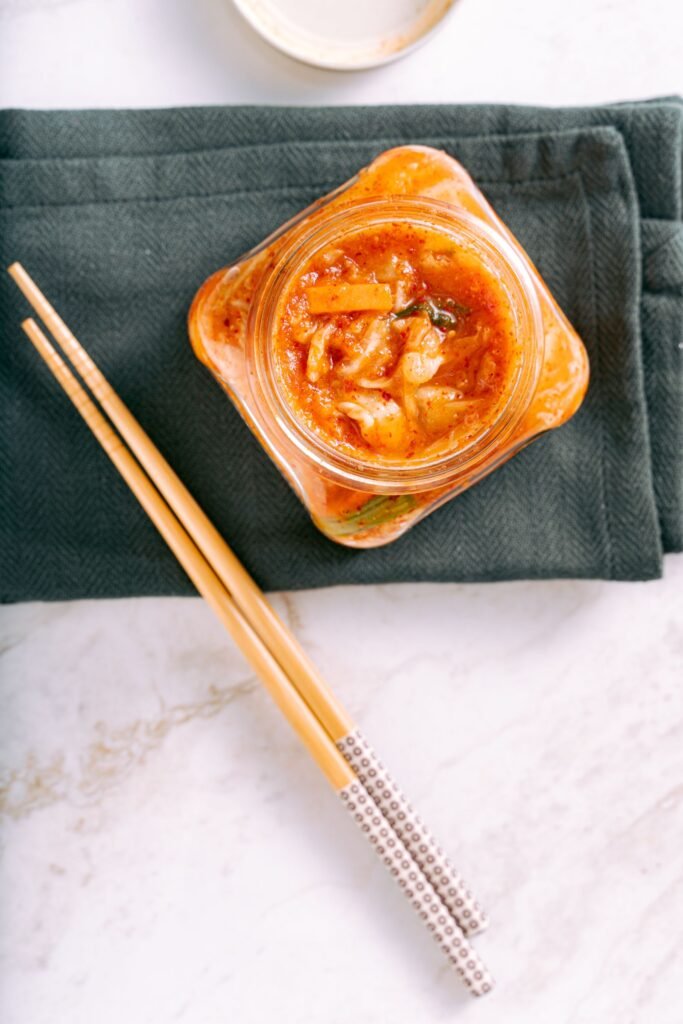
For a lectin-conscious kitchen, white kimchi is the safer kimchi style because it skips the chile flakes. Wildbrine’s version is a vegan, fish-free white turmeric kimchi with minimal heat. Like the brand’s kraut, it is wild-fermented, live and raw, and never pasteurized.
Key specs
- Type: mild white turmeric kimchi
- Size: 18 oz jar
- Raw, live, never pasteurized
- Vegan and fish-free
- Heat: minimal
- Storage: refrigerated
Pros
- No chile heat, so no nightshade worries for strict eaters
- Raw and unpasteurized
- Mild enough for kimchi beginners
Cons
- Refrigerated delivery only
- Less classic flavor than red kimchi
- Check the label for any ingredients you avoid
Best for: Strict lectin-free eaters who want kimchi without nightshade chile flakes.
4. Mother-in-Law’s Vegan Napa Cabbage Kimchi
If you tolerate peppers and want the real thing, Mother-in-Law’s is a well-known US kimchi maker that ferments in-house. The vegan version uses napa cabbage, seedless Korean gochugaru chile flakes, onion, garlic, ginger, sugar and salt, with no MSG or preservatives.
Key specs
- Type: vegan napa cabbage kimchi
- Size: 16 oz
- Ingredients (per listing): napa cabbage, Korean chile flakes, onion, garlic, ginger, sugar, salt
- No MSG, no preservatives
- Fermented in-house, hand-packed in the USA
- Storage: refrigerated
Pros
- Authentic, traditional flavor
- Short ingredient list
- Vegan (no fish sauce)
Cons
- Contains chile flakes, a nightshade
- Contains some sugar
- Spicy for some palates
Best for: Kimchi lovers who are fine with peppers and want a traditional jar.
Kefir
5. Meyenberg Plain Goat Kefir
Dr. Gundry’s list avoids most cow’s-milk kefir and yogurt because of A1 casein, but plain goat’s and sheep’s milk kefir are on his yes list, with a suggested limit of about 4 ounces of yogurt (or 1 ounce of cheese) a day. Meyenberg’s plain goat kefir is one of the easier goat options to find.
Key specs
- Type: plain goat’s milk kefir
- Size: 32 fl oz
- Plain (no added fruit flavors)
- Storage: refrigerated
- Fits Dr. Gundry’s goat/sheep dairy guidance
Pros
- Goat dairy instead of A1 cow’s milk
- Plain, so no added fruit sugar
- Drink it, or use it in smoothies and dressings
Cons
- Refrigerated delivery only
- Tangy, “goaty” flavor is not for everyone
- Dairy portions should stay modest
Best for: Kefir drinkers switching from cow’s milk to goat’s milk.
6. Fusion Teas Milk Kefir Grains
Kefir grains are a living culture you drop into milk; a day later you have kefir, and the grains go into the next batch. That makes them the cheapest long-term route to goat’s milk kefir. Fusion Teas says it feeds its grains daily, includes a 52-page ebook and video tutorial, and offers email support for fermenting questions.
Key specs
- Type: fresh live milk kefir grains
- Amount: 1 tablespoon starter portion
- Reusable indefinitely with care
- Includes ebook, video tutorial and email support
- Ships fresh; revive on arrival
Pros
- Reusable, so far cheaper per glass over time
- Lets you choose goat or sheep milk
- Good support for beginners
Cons
- Needs feeding every day or two
- Fresh grains can take a few batches to settle in
- Not a ready-to-drink product
Best for: Hands-on cooks who drink kefir often and want full control over the milk.
Already making goat’s milk yogurt? Our yogurt maker guide covers the gear.
Miso and vinegar
7. Miso Master Organic Mellow White Miso
Miso is on Dr. Gundry’s yes list, and Miso Master is an American maker of unpasteurized, living miso. The Mellow White is made with organic soybeans and handmade koji rice and aged for 30 days, giving a smooth, mild flavor that works in soups, dressings, glazes and even baked goods.
Key specs
- Type: unpasteurized organic white miso
- Size: 16 oz tub
- Ingredients: organic soybeans and koji rice (per listing)
- Aged 30 days
- Gluten-free, vegan, non-GMO, no added MSG
- Storage: refrigerated
Pros
- Live, unpasteurized miso
- Mild flavor that is easy to cook with
- A little goes a long way
Cons
- Made with soy and rice, which strict lectin-free eaters may limit
- High in sodium
- Needs refrigeration
Best for: Adding savory depth to broths and dressings without bouillon cubes.
8. Bragg Organic Raw Apple Cider Vinegar
Vinegars without added sugar are on Dr. Gundry’s yes list, and Bragg is the classic raw, unfiltered apple cider vinegar with the “mother.” Bragg says it tests for the presence of live mother and lists 750 mg of acetic acid per serving. It is not a probiotic food in the same way as kraut or kefir, but it is a fermented staple for dressings and slaws.
Key specs
- Type: raw, unfiltered, unpasteurized apple cider vinegar
- Size: 32 oz
- With the mother (tested for live mother, per Bragg)
- 750 mg acetic acid per serving
- USDA Organic, non-GMO verified, kosher
Pros
- Raw and unfiltered
- Shelf-stable and easy to ship
- Very versatile in the kitchen
Cons
- Acidic: dilute it and rinse after drinking to protect tooth enamel
- Health claims for ACV are often overstated
- Strong flavor
Best for: Homemade lectin-free salad dressings, slaws and marinades.
Make your own: fermentation gear
Homemade sauerkraut costs pennies a jar: cabbage, salt, a weight to keep it under the brine, and a lid that lets gas out. Here are the tools that make it easy.
9. Masontops Complete Mason Jar Fermentation Kit
This kit turns four wide-mouth mason jars into fermenters. It includes four Pickle Pipe airlock lids, which vent gas through a one-way silicone valve so you do not have to burp the jars, four Pickle Pebble glass weights to keep vegetables submerged, an acacia wood tamper for packing kraut, and a printed recipe book.
Key specs
- Includes: 4 Pickle Pipe airlock lids, 4 Pickle Pebble weights, acacia tamper, recipe book
- Fits: wide-mouth mason jars (jars not included)
- Waterless one-way airlock; no burping
- Good for kraut, kimchi, pickles and other vegetables
Pros
- Everything you need except jars, cabbage and salt
- Low-maintenance airlocks
- Small batches are easy to fit in a cupboard
Cons
- Jars sold separately
- Small-batch only
- Silicone lids can absorb smells over time
Best for: First-time fermenters who want a simple, complete setup.
Also worth a look
- TOMO Ceramic Fermentation Crock, 1 Gallon: a glazed stoneware crock with weights and a wide water-lock seal; TOMO says the 1-gallon size fits 2–3 cabbages, enough for about five mason jars of kraut.
- Cutting Edge Cultures Vegetable Starter Culture: six pouches, each for about 5 pounds of vegetables, for a quicker, more consistent ferment than wild fermentation.
- Masontops Pickle Pipes airlock lids: just the lids, if you already have weights.
Watch: the easiest homemade sauerkraut
How to add fermented foods to a lectin-free day
- Start small. A forkful of kraut or kimchi a day is plenty at first. Jumping to big servings can cause gas and bloating.
- Pair them with fiber. Leafy greens, cruciferous vegetables, leeks and artichokes feed the microbes the ferments bring in.
- Do not cook the live ones. Add kraut and kimchi to food after cooking, and stir miso into soup off the boil, to keep cultures alive.
- Mind the salt. Fermented vegetables and miso are salty, so balance them with low-sodium foods if you watch your blood pressure.
- Foods and supplements are different. Fermented foods are not a substitute for a probiotic your clinician recommends. See our probiotics guide for that side of things.
FAQ
Are fermented foods lectin-free?
Raw sauerkraut, kimchi, miso, sugar-free vinegars and plain goat’s or sheep’s milk kefir all appear on Dr. Gundry’s yes list. Fermentation can also reduce lectins in some foods. Watch for add-ins such as chile flakes in red kimchi, sugar, or soy and grains in miso if you follow a strict version of the plan.
Is canned or shelf-stable sauerkraut still good for you?
It still has fiber and flavor, but shelf-stable kraut has usually been heat-treated, which kills the live cultures. Look for refrigerated jars labeled raw, live or unpasteurized if live microbes are the goal.
How much fermented food should I eat?
There is no official amount. The Stanford study saw stronger effects with larger servings, but that was a supervised trial. Most people do well starting with a tablespoon or two a day and building up slowly.
Is kimchi OK on a lectin-free diet?
Dr. Gundry lists kimchi as a yes food. Traditional red kimchi contains chile flakes, which are nightshades, so if you avoid all nightshades, choose a white kimchi such as Wildbrine Mild White.
Can I make goat’s milk kefir at home?
Yes. Add milk kefir grains to goat’s milk, leave it at room temperature for about a day, strain out the grains and repeat. The grains are reusable.
Did you taste-test these products?
No. We have not taste-tested these products for this review. Product details come from the Amazon listings we checked on November 18, 2026.
Bottom line
For an easy daily habit, keep a jar of raw sauerkraut such as Wildbrine or Wise Goat Organics in the fridge, add Wildbrine Mild White Kimchi if you avoid nightshades, and switch to plain goat’s milk kefir (or make your own with kefir grains). Miso and raw apple cider vinegar round out the pantry, and a Masontops kit lets you make kraut for pennies. Start small, read labels for live cultures, sugar and chile, and remember this is general information, not medical advice.