Best Lectin-Free Flours (2026): 8 Gundry-Approved Flours for Baking
Affiliate disclosure: My Lectin Free Lunchbox may earn a commission from qualifying purchases, including as an Amazon Associate, at no extra cost to you.
This article is for informational purposes only and is not medical advice. Talk with your clinician before making big changes to your diet, especially if you are managing diabetes, prediabetes, an autoimmune condition or a food allergy.
Giving up wheat is the first big step on a lectin-free plan, and it’s the one that makes baking feel impossible. Most “gluten-free” flour blends don’t help, because they lean on rice, oats, corn, buckwheat, quinoa or chickpeas, which are all on Dr. Steven Gundry’s no list. The flours that do work come from nuts, roots, tubers, coconut, green bananas and a couple of hull-less grains.
This guide covers eight lectin-free flours you can buy on Amazon, one for each job in a lectin-free kitchen: everyday baking, wheat-like breads and tortillas, thickening sauces, adding fiber, and nut-free options. We have not baked with these specific brands for this review. Details come from the live Amazon listings, checked on November 14, 2026, and from Dr. Gundry’s published food list. Always read the bag before you buy.
Quick picks: best lectin-free flours
| Flour | Made from | Best for | Nut-free? | Link |
|---|---|---|---|---|
| Bob’s Red Mill Blanched Almond Flour | Blanched almonds | Everyday baking, cookies, coatings | No | Check price on Amazon |
| Otto’s Naturals Cassava Flour | Whole cassava root | Wheat-like breads, tortillas, pancakes | Yes | Check price on Amazon |
| Anthony’s Organic Coconut Flour | Organic coconut | High-fiber, low-carb baking | Yes (coconut) | Check price on Amazon |
| Anthony’s Arrowroot Flour | Arrowroot root | Thickening sauces, lighter texture | Yes | Check price on Amazon |
| Anthony’s Organic Tiger Nut Flour | Tiger nut tubers | Nut-free, naturally sweet baking | Yes (a tuber) | Check price on Amazon |
| LiveKuna Organic Green Banana Flour | Unripe green bananas | Resistant-starch baking and smoothies | Yes | Check price on Amazon |
| Bob’s Red Mill Sorghum Flour | Whole grain sorghum | Bread blends and sourdough | Yes | Check price on Amazon |
| Amisa Organic Chestnut Flour | Chestnuts | Crepes, Italian-style cakes | Chestnut | Check price on Amazon |
Which flours are lectin-free?
Dr. Gundry’s official Energy Paradox Yes/No food list (published by Gundry Health) puts these flours on the yes side: blanched almond, arrowroot, cassava, chestnut, coconut, coffee fruit, grape seed, green banana, hazelnut, millet, sesame, sorghum, sweet potato and tiger nut. On the no side are wheat flour and grains like rice, oats, buckwheat and quinoa, plus legumes such as chickpeas. He also lists “almonds with peels” as a no, which is why the word blanched matters on an almond flour bag.
Millet and sorghum are the interesting exceptions. In his Gundry MD flour tier list, Dr. Gundry explains that they are among the few grains without a hull, which is where he says most of the lectins sit. He also adds a caution that applies to every flour here: grinding any food into a fine powder makes it digest faster and raise blood sugar more quickly, so these are not “free foods.”
For balance, Harvard’s Nutrition Source notes that most lectins are inactivated by wet, high-heat cooking and that there is very limited research in humans on dietary lectins and long-term health. Many people go lectin-free because they feel better on it, not because the science is settled.
Watch: Dr. Gundry ranks flours from best to worst
In this Gundry MD “Gut Instincts” episode, Dr. Gundry ranks common flours. His top tier matches this guide: coconut, sorghum, millet, freshly ground flax, green banana, blanched almond, tapioca, arrowroot and cassava.
1. Bob’s Red Mill Blanched Almond Flour: best everyday flour
Almond flour is the workhorse of lectin-free baking, and Dr. Gundry gives blanched almond flour an A in his tier list. Bob’s Red Mill makes this one from a single ingredient, whole blanched almonds, ground super-fine so it works for delicate bakes like macarons as well as cookies, muffins and pancakes.
It also works as a low-carb coating for chicken or fish and as a breadcrumb swap in meatballs. Almond flour is heavier and moister than wheat flour, so it usually needs eggs or a binder and a recipe written for it rather than a straight 1:1 swap.
Key details (per the Amazon listing)
- Ingredient: blanched almonds
- Texture: finely sifted, super-fine
- Gluten free (tested), Non-GMO Project Verified, paleo and keto friendly
- Size: 1 lb bags, pack of 4
Pros
- Blanched, as Dr. Gundry recommends
- Single ingredient from a well-known brand
- Very versatile: baking, breading, thickening
Cons
- Not for nut-allergy households
- Higher in calories and fat than root flours
- Needs recipes written for almond flour
Best for: Your first lectin-free flour, for cookies, muffins, pancakes and breading.
2. Otto’s Naturals Cassava Flour: most wheat-like
If you miss bread, tortillas and pizza crust, cassava flour is the closest you will get to wheat. Otto’s Naturals is made from 100% cassava and says it can replace wheat flour 1:1 by weight (or use about 25% less when measuring by cups). Dr. Gundry puts cassava in his top tier, with his usual caution that ground root flours raise blood sugar quickly.
It is free of the top 9 allergens, grain-free and nut-free, which makes it a great choice for lunchboxes that go to nut-free schools. Cassava flour is not the same as tapioca starch: cassava flour uses the whole root, while tapioca is just the extracted starch.
Key details (per the Amazon listing)
- Ingredient: cassava
- Top 9 allergen free; gluten free, grain free, nut free; Non-GMO certified
- Swap: 1:1 by weight with wheat flour, or about 25% less by cup
- Size: 2 lb bag
Pros
- Closest taste and texture to wheat flour
- Nut-free and allergen-friendly
- Simple 1:1 swaps in many recipes
Cons
- High in starch, so portion sizes matter
- Can turn gummy if over-measured
- Pricier than wheat flour
Best for: Bread, tortillas, pizza crust, pancakes and nut-free kitchens.
Watch: our cassava and almond flour biscuits
Here is how we use the top two flours together in our own kitchen: buttermilk-style biscuits made with cassava and almond flour.
3. Anthony’s Organic Coconut Flour: best for fiber
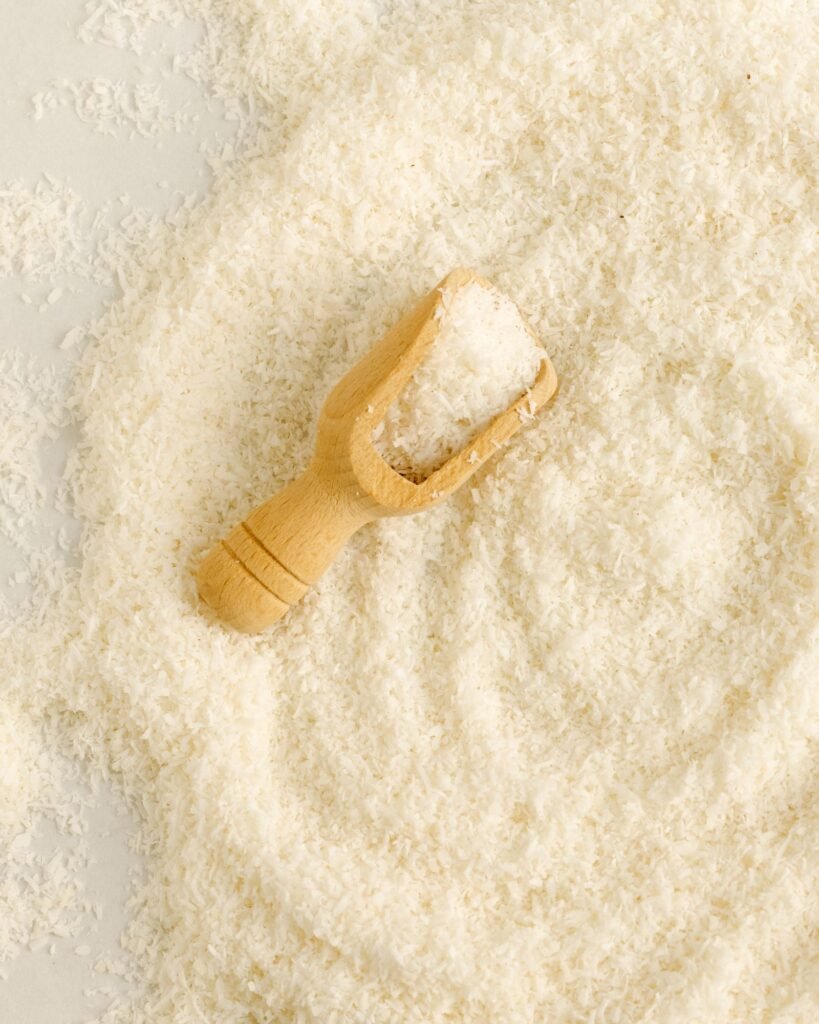
Dr. Gundry moves coconut flour up to his superfood tier, noting it is full of fiber and contains some MCTs. Anthony’s is USDA certified organic, batch tested gluten free and finely milled with low moisture, and it comes in a big 4 lb bag.
The catch is that coconut flour soaks up a lot of liquid. Dr. Gundry says it works best when you know the ratios and mix it with other flours. Most recipes use only a small amount, often with extra eggs, so do not swap it 1:1 for almond or wheat flour.
Key details (per the Amazon listing)
- Ingredient: organic coconut, finely milled; no preservatives
- USDA organic; batch tested gluten free; non-GMO; vegan, paleo and keto friendly
- High in fiber and protein (per listing); low moisture
- Size: 4 lb bag
Pros
- Rated a superfood flour by Dr. Gundry
- Very high fiber, so a little goes a long way
- Big organic bag for the price
Cons
- Absorbs lots of liquid; needs coconut-specific recipes
- Mild coconut flavor
- Can make bakes dry if over-used
Best for: Low-carb baking and boosting fiber in almond or cassava recipes.
4. Anthony’s Arrowroot Flour: best thickener
Arrowroot is the lectin-free answer to cornstarch. Dr. Gundry describes it as almost pure prebiotic fiber with no lectins, since roots protect themselves differently from seeds. Use it to thicken sauces, gravies and soups, or add a little to almond and cassava batters for a lighter, fluffier texture.
Anthony’s version is a single ingredient, finely ground and batch tested gluten free, in a 2.5 lb bag that will last a long time if you mostly use it for thickening.
Key details (per the Amazon listing)
- Ingredient: arrowroot powder
- Batch tested gluten free; non-GMO; vegan; paleo
- Uses: thickener for sauces and gravies, cornstarch alternative, adds elasticity to gluten-free doughs
- Size: 2.5 lb bag
Pros
- Direct swap for cornstarch in sauces
- Lightens almond and cassava bakes
- One ingredient
Cons
- Not a stand-alone baking flour
- Pure starch, so use small amounts
- Sauces thickened with it can thin out if reheated for a long time
Best for: Gravies, pan sauces, soups and lighter lectin-free baked goods.
5. Anthony’s Organic Tiger Nut Flour: best nut-free option
Despite the name, tiger nuts are small tubers, not tree nuts, and tiger nut flour is on Dr. Gundry’s yes list. The flour has a naturally sweet, nutty taste, which makes it good for cookies, crusts and pancakes when you want an almond-flour feel in a nut-free kitchen.
Anthony’s is USDA certified organic, finely ground and batch tested gluten free. Tiger nuts are also a source of resistant starch, which Dr. Gundry encourages, though grinding and baking change how much survives.
Key details (per the Amazon listing)
- Ingredient: organic tiger nuts, finely ground
- USDA organic; batch tested gluten free; non-GMO; paleo and keto friendly (per listing)
- Uses: cookies, cakes, crusts and more
- Size: 1 lb bag
Pros
- Nut-free alternative to almond flour
- Naturally sweet, so recipes need less sweetener
- On Dr. Gundry’s yes list
Cons
- Small 1 lb bag
- Slightly gritty texture in some recipes
- Less familiar, so fewer recipes online
Best for: Nut-free schools and anyone who wants variety beyond almond flour.
6. LiveKuna Organic Green Banana Flour: best for resistant starch
Dr. Gundry calls green banana flour a superfood and “one of your best baking opportunities,” as long as the label says green banana. Unripe bananas are rich in fiber that has not yet turned to sugar, and the flour does not taste much like banana.
LiveKuna’s flour is a single organic ingredient, gluten free and grain free, in a 32 oz bag. Use it in pancakes, muffins and brownies, or blend a spoonful into smoothies. Note that baking reduces some resistant starch, so a raw smoothie spoonful keeps the most.
Key details (per the Amazon listing)
- Ingredient: organic green banana flour
- Gluten free, grain free, low fat, organic, wheat free
- Size: 32 oz bag
Pros
- Rated a superfood flour by Dr. Gundry
- Mild flavor; works in sweet and savory recipes
- Also useful as a smoothie fiber boost
Cons
- Listing says little about how fine it is milled
- Can make bakes dense if used alone
- The listing showed limited stock when we checked
Best for: Pancakes, brownies and smoothies when you want more prebiotic fiber.
7. Bob’s Red Mill Sorghum Flour: best grain-style flour
Sorghum is one of the two hull-less grains Dr. Gundry puts in his top tier, and it is on his yes list as sorghum flour. Bob’s Red Mill stone-grinds whole grain sorghum, which has a mild taste and smooth texture that works well in sweet breads, cookies and gluten-free sourdough.
Sorghum flour has no gluten, so you will need a binder such as eggs, psyllium or xanthan gum (Bob’s suggests xanthan). Dr. Gundry warns that some of his patients see higher triglycerides when they eat a lot of millet and sorghum foods, so use it as part of a blend, not a daily bread habit.
Key details (per the Amazon listing)
- Ingredient: whole grain sorghum, stone ground
- Gluten free, vegan, kosher
- Uses: custom gluten-free blends, sweet breads, cookies, sourdough; needs a binder
- Size: 22 oz bags, pack of 4
Pros
- Most bread-like flavor of the lectin-free grains
- Great in sourdough and flour blends
- Trusted brand, stone ground
Cons
- A whole grain, so it raises blood sugar more than nut flours
- Needs a binder
- Pack of four is a lot if you are just experimenting
Best for: Bakers who want a grain-style flour for breads and sourdough.
8. Amisa Organic Chestnut Flour: best for crepes and cakes
Chestnut flour is on Dr. Gundry’s yes list and has been used in Italian cooking for centuries. It is naturally sweet and earthy, and it shines in crepes, pancakes, flatbreads and the Tuscan chestnut cake called castagnaccio. Chestnuts are much lower in fat than other nuts, so this flour behaves more like a starch.
Amisa’s flour is certified organic and free from gluten and wheat. Note that the listing shows a UK-style best-before date (day/month/year) and a small 350 g bag, so it is better as a specialty flour than an everyday one.
Key details (per the Amazon listing)
- Ingredient: organic chestnut flour
- Free from gluten and wheat; organic
- Size: 350 g (about 12.3 oz); best-before shown as DD/MM/YYYY
Pros
- Unique sweet, nutty flavor
- Lower fat than almond flour
- On Dr. Gundry’s yes list
Cons
- Small bag; costly per ounce
- Strong flavor is not for every recipe
- Tree-nut allergy households should ask their doctor
Best for: Crepes, pancakes and Italian-style desserts.
Buyer’s guide: how to choose and use lectin-free flours
Start with two flours
Most lectin-free bakers keep blanched almond flour and cassava flour on hand, then add coconut flour for fiber and arrowroot for thickening. That combination covers cookies, muffins, pancakes, biscuits, breading and gravies.
Read the label for these words
- Blanched on almond flour (skins removed)
- Green or unripe on banana flour
- 100% or a single ingredient on cassava, arrowroot, coconut and tiger nut flours
- Gluten free (tested) if you are sensitive, since cross-contact with wheat can happen in mills
Avoid these “gluten-free” traps
Many gluten-free blends are built on rice, oat, corn, buckwheat, quinoa, chickpea or bean flours, all of which Dr. Gundry lists as lectin sources or ranks low. Masa harina (nixtamalized corn) is the one corn flour he ranks better, but it is still not on his yes list. Ancient wheats like einkorn and spelt are still wheat.
Blend for better texture
Single flours rarely act like wheat. A simple starting blend is two parts almond flour to one part cassava or tiger nut flour, with a tablespoon or two of arrowroot for lift. Coconut flour is very absorbent, so use about a quarter as much as almond flour and add extra liquid or eggs.
Mind portions and blood sugar
Dr. Gundry’s caution is worth repeating: any food ground into flour digests faster. Root and grain flours (cassava, arrowroot, sorghum) are starch-heavy, so pair baked goods with protein and healthy fats, and keep portions modest. His food list says people with prediabetes or diabetes should be especially careful with processed resistant starches.
Store them well
Nut flours like almond and chestnut can go rancid. Keep them sealed in the fridge or freezer. Dr. Gundry also suggests buying flaxseed whole and grinding it yourself, or keeping flax meal refrigerated.
Looking for ready-made options instead? See our guides to lectin-free bread brands and lectin-free pasta and noodles.
FAQs
Is almond flour lectin-free?
Blanched almond flour is on Dr. Gundry’s yes list. He says the almond peel contains a problematic lectin, so choose flour labeled blanched, not “almond meal,” which often includes skins.
Is cassava flour the same as tapioca flour?
Not quite. Both come from the cassava root, but cassava flour uses the whole root, while tapioca flour is the extracted starch. Dr. Gundry treats both as usable, and cassava flour behaves more like wheat flour in baking.
Is coconut flour lectin-free?
Yes. Coconut flour is on Dr. Gundry’s yes list, and he ranks it among his favorite flours because of its fiber. Just remember it absorbs a lot of liquid.
Are gluten-free flours automatically lectin-free?
No. Rice, oat, corn, buckwheat, quinoa and chickpea flours are gluten-free but are lectin sources according to Dr. Gundry. Always check what a gluten-free blend is made from.
Can I swap lectin-free flours 1:1 for wheat flour?
Sometimes. Otto’s says its cassava flour swaps 1:1 by weight. Almond, coconut and sorghum flours usually need recipes written for them, extra eggs or a binder.
Which lectin-free flour is best for people with nut allergies?
Cassava, tiger nut, green banana, arrowroot and sorghum flours are all nut-free. Coconut and chestnut are classified differently by different allergy groups, so check with your allergist.
Bottom line
If you buy just one lectin-free flour, make it Bob’s Red Mill Blanched Almond Flour. Add Otto’s Naturals Cassava Flour for breads and tortillas and you can bake most of your old favorites. Anthony’s Coconut Flour adds fiber, arrowroot replaces cornstarch, tiger nut flour is the nut-free pick, green banana flour brings resistant starch, sorghum gives you a grain-style option, and chestnut flour is a fun specialty. Bake with a blend, keep portions modest and enjoy having bread back on the menu.