Best Sugar Alternatives for a Lectin-Free Diet (2026): Allulose, Monk Fruit, Stevia and More
Affiliate disclosure: My Lectin Free Lunchbox may earn a commission from qualifying purchases, including as an Amazon Associate, at no extra cost to you.
This article is for informational purposes only and is not medical advice. If you have diabetes, a heart condition, a digestive disorder or take medication that affects blood sugar, talk with your clinician or a registered dietitian before changing sweeteners.
Giving up sugar is one of the hardest parts of eating the Dr. Gundry way. Granulated sugar (even organic cane sugar), agave, coconut sugar, Splenda, aspartame, saccharin and acesulfame-K all sit on the “no” side of Dr. Steven Gundry’s Energy Paradox Yes/No food list. The good news is that the “yes” side has real options: allulose, monk fruit, stevia, inulin and yacón syrup, plus very limited local or manuka honey.
The trick is buying the right version of each one. Many “monk fruit” and “stevia” sweeteners on the shelf are mostly erythritol or dextrose with a little of the named sweetener mixed in. Below are the sugar alternatives we would put in a lectin-free pantry, what is actually in each one, and what each is best for.
How we picked: every product below was listed and in stock on Amazon when we checked on November 19, 2026, and ingredients come from the live listings. We favored single-ingredient sweeteners or simple blends without erythritol, dextrose or maltodextrin. We have not run taste tests on these specific products, and labels change, so always read the ingredient list on the package you receive.

Quick picks: best lectin-free sugar alternatives
| Sweetener | Type | Best for | Link |
|---|---|---|---|
| Wholesome Allulose | Allulose (single ingredient) | Baking and everyday use | Check price on Amazon |
| It’s Just! Allulose (32 oz) | Allulose (single ingredient) | Bulk value, batch-tested | Check price on Amazon |
| Besti Monk Fruit Allulose Blend | Allulose + monk fruit | Cup-for-cup sugar swap | Check price on Amazon |
| Lakanto Classic Monk Fruit with Allulose | Allulose + monk fruit | Big-bag baking | Check price on Amazon |
| Lakanto Liquid Monk Fruit Drops | Liquid monk fruit | Coffee and tea | Check price on Amazon |
| Morning Pep 100% Pure Monk Fruit Extract | Pure monk fruit powder | Smoothies, dressings, tiny doses | Check price on Amazon |
| SweetLeaf SteviaClear Drops | Organic liquid stevia | Drinks (the brand on Gundry’s list) | Check price on Amazon |
| It’s Just! Inulin | Chicory root fiber | A mildly sweet prebiotic boost | Check price on Amazon |
The lectin-free sweetener basics
- Allulose is a rare sugar found in small amounts in foods like figs and raisins. It tastes and bakes like sugar but is about 70% as sweet. The FDA lets manufacturers leave allulose out of the Total and Added Sugars lines on the Nutrition Facts label and count it at 0.4 calories per gram, because it is largely not metabolized like table sugar. Dr. Gundry’s list says to look for non-GMO allulose.
- Monk fruit (luo han guo) extract gets its sweetness from compounds called mogrosides. Pure extract is extremely concentrated, so most granulated “monk fruit sweeteners” are mostly a bulking agent, usually erythritol or allulose.
- Stevia comes from the leaf of the stevia plant. It is very sweet with a slightly bitter or licorice-like finish for some people. Gundry’s list names SweetLeaf as his favorite brand.
- Inulin is a prebiotic fiber, usually from chicory root. It is only lightly sweet, so it works best as a partial swap. Gundry’s list names the Just Like Sugar brand.
- Yacón syrup, from a South American root, is a molasses-like syrup rich in fructooligosaccharides. Gundry’s list mentions Sunfood’s version. Use it sparingly.
Watch: Dr. Gundry ranks the sweeteners
In this Gut Instincts episode, Dr. Gundry ranks common sweeteners from worst to best for your gut. He calls allulose his favorite, says monk fruit is still one of his favorites, and explains why stevia has slipped down his personal list.
Allulose
1. Wholesome Allulose: best everyday allulose
Wholesome’s granulated allulose has one ingredient: allulose. Wholesome says it bakes and browns like sugar, has no glycemic impact, and works in coffee, tea and smoothies. Because allulose is less sweet than sugar, Wholesome recommends using 1 1/3 cups of allulose for every cup of sugar.
It is Non-GMO Project Verified, Keto Certified, kosher, gluten free and vegan. One detail lectin-free shoppers may care about: Wholesome says its allulose is made through an enzymatic process using non-GMO corn. Allulose is a purified sugar rather than a whole grain, but if you avoid corn-derived ingredients entirely, read labels and ask brands about their source. Wholesome also sells a liquid allulose that is handy for iced tea and cold brew.
What’s in it
- Ingredients: allulose
- Non-GMO Project Verified, Keto Certified, kosher
- Use 1 1/3 cups per 1 cup sugar
- Made enzymatically from non-GMO corn (per Wholesome)
- 12 oz bag; liquid version also available
Pros
- Single ingredient
- Bakes and browns like sugar
- Widely available
Cons
- Corn-derived, which some strict eaters avoid
- Less sweet than sugar, so you use more
- Allulose browns faster, so watch oven times
Best for: Everyday baking, coffee and anyone switching from sugar for the first time.
2. It’s Just! Allulose: best bulk allulose
If allulose becomes your main sweetener, the 32-ounce bag from It’s Just! is the economical way to buy it. It is also a single-ingredient product, and the brand says every batch is tested by an independent lab with results posted on its website, which is a nice level of transparency for a pantry staple.
The listing says it bakes, browns and caramelizes like sugar and pitches it as a 1:1 replacement, without the cooling effect of erythritol. It is packaged in California in a GMP-compliant facility.
What’s in it
- Ingredients: allulose
- Third-party lab tested every batch (per brand)
- 32 oz bag
- Packaged in California
Pros
- Large bag for regular bakers
- Batch testing with posted results
- No cooling aftertaste
Cons
- A 1:1 swap will taste a little less sweet than sugar
- Big bag needs an airtight container
- Source crop not stated on the listing
Best for: Households that bake often or use allulose daily in drinks.
Monk fruit blends and extracts
3. Besti Monk Fruit Allulose Blend: best cup-for-cup sugar swap
Besti, from the Wholesome Yum low-carb recipe brand, blends allulose with monk fruit extract so it matches sugar’s sweetness cup-for-cup. That solves allulose’s main weakness without adding erythritol. The brand says it produces soft, moist baked goods and has no aftertaste.
It is Non-GMO Project Verified and labeled gluten free, keto, kosher, paleo and vegan. Wholesome Yum’s own low-carb recipes are written with Besti in mind, which makes conversions simple if you cook from that site.
What’s in it
- Ingredients: allulose, monk fruit extract
- Replaces sugar cup-for-cup (per brand)
- No erythritol
- Non-GMO Project Verified; 12 oz
Pros
- Sugar-level sweetness with just two ingredients
- Easy recipe conversions
- No cooling effect
Cons
- Pricier per ounce than plain allulose
- Small bag
- Allulose base still browns quickly
Best for: Bakers who want a simple, no-math sugar replacement.
4. Lakanto Classic Monk Fruit Sweetener with Allulose: best big-bag blend
Lakanto is the biggest name in monk fruit, but its original Classic sweetener is mostly erythritol. This version swaps in allulose: the listed ingredients are allulose and monk fruit extract. Lakanto describes it as a close-to-1:1 sugar replacement that dissolves quickly in drinks and mimics sugar’s browning in recipes.
The 3-pound bag makes it a practical choice for holiday baking. Just be careful when you reorder, because Lakanto sells several similar-looking bags, and only the allulose versions leave out erythritol.
What’s in it
- Ingredients: allulose, monk fruit extract
- Close to 1:1 with sugar (per Lakanto)
- No erythritol in this version
- 3 lb bag; keto, kosher, vegan
Pros
- Large bag at a well-known brand
- Dissolves well in drinks
- Simple two-ingredient label
Cons
- Easy to confuse with Lakanto’s erythritol blends
- Big bag needs airtight storage
- Monk fruit taste is noticeable to some people
Best for: Big-batch bakers who want a trusted brand without erythritol.
5. Lakanto Liquid Monk Fruit Drops: best for coffee and tea
For drinks, drops beat granules. Lakanto’s Original liquid monk fruit lists purified water, monk fruit extract, natural flavors and citric acid, with no erythritol. Lakanto suggests three or four drops per 12-ounce drink, and the 1.76-ounce bottle holds about 260 servings.
It blends instantly into hot or cold drinks. Refrigerate it after opening and use it within 90 days, per the label directions.
What’s in it
- Ingredients: purified water, monk fruit extract, natural flavors, citric acid
- 3–4 drops per 12 oz drink
- About 260 servings per 1.76 fl oz bottle
- Refrigerate after opening; use within 90 days
Pros
- Precise sweetness in drinks
- No erythritol
- Small enough for a bag or desk drawer
Cons
- Contains natural flavors
- Not for baking volume
- Must be refrigerated and used within 90 days
Best for: Coffee, tea, sparkling water and plain goat or sheep yogurt.
6. Morning Pep 100% Pure Monk Fruit Extract: best pure monk fruit
If you want monk fruit with nothing else, this is it. Morning Pep’s powder lists a single ingredient, 100% monk fruit extract (luo han guo), with no erythritol, sugar alcohols or fillers. It is Non-GMO Project Verified, Keto Certified and OU kosher.
Pure extract is very concentrated, so you measure it in tiny pinches, not spoonfuls. That makes it great for smoothies, salad dressings, sauces and drinks, but it cannot replace the bulk of sugar in baking on its own. Pair it with allulose if a recipe needs volume.
What’s in it
- Ingredients: 100% monk fruit extract
- No erythritol, sugar alcohols or fillers
- Non-GMO Project Verified, Keto Certified, OU kosher
- 5 oz
Pros
- Purest monk fruit option here
- A little goes a long way
- No bulking agents
Cons
- Hard to measure small amounts
- Adds no bulk for baking
- Some people notice a fruity aftertaste at high doses
Best for: Label readers who want a single-ingredient monk fruit for drinks and sauces.
Stevia and inulin
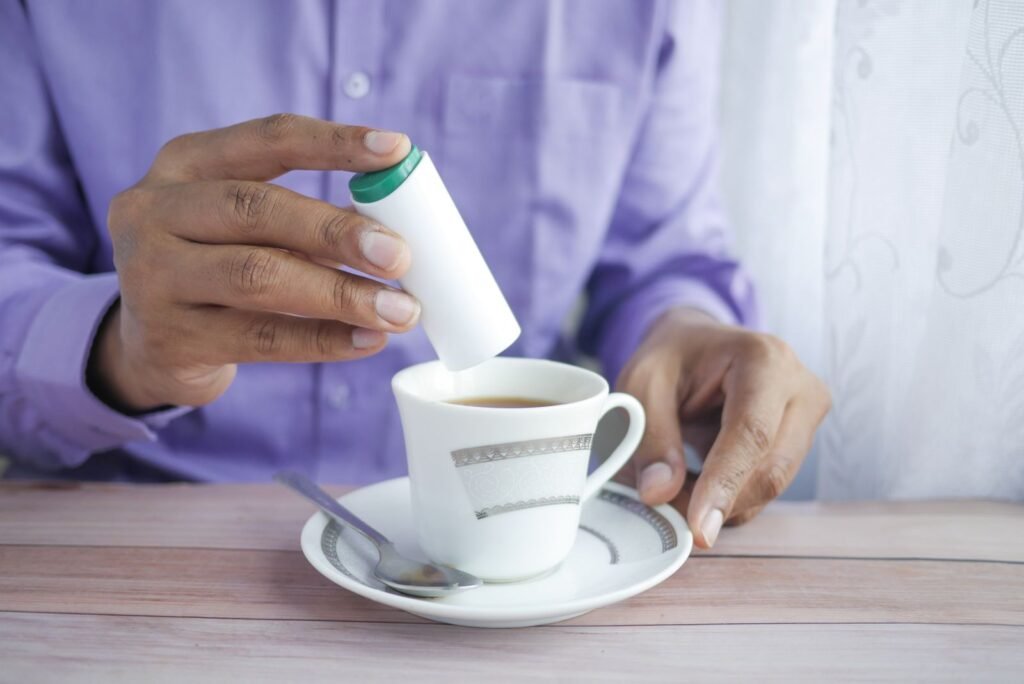
7. SweetLeaf SteviaClear Drops: best stevia
SweetLeaf is the stevia brand named on Dr. Gundry’s yes list. SteviaClear is the unflavored version of its liquid Sweet Drops, with organic glycerin, purified water, organic natural flavors and organic stevia leaf extract. It is certified organic, has zero calories, and the 4-ounce bottle travels easily.
One honest note: in the video above, Dr. Gundry says stevia has “gone down the list” of his favorites, citing possible effects on insulin and the gut microbiome. It remains on his printed yes list, so think of it as an occasional option rather than your main sweetener.
What’s in it
- Ingredients: organic glycerin, purified water, organic natural flavors, organic stevia leaf extract
- Certified organic; zero calories
- 4 fl oz bottle
Pros
- The specific brand on Gundry’s list
- Organic ingredients
- Very little needed per drink
Cons
- Some people taste a bitter finish
- Dr. Gundry now ranks stevia below allulose and monk fruit
- Contains natural flavors and glycerin
Best for: Occasional use in drinks if you like the taste of stevia.
8. It’s Just! Inulin: best prebiotic sweetener
Inulin is the sweetener on this list that does more than sweeten. It’s Just! Inulin is one ingredient: chicory root powder from Belgium. Inulin is a soluble prebiotic fiber that feeds gut bacteria, and it is only mildly sweet, so it works best stirred into coffee, smoothies or yogurt alongside a little allulose or monk fruit.
Start with a small amount. Inulin ferments in the gut, and too much too fast can cause gas and bloating. Gundry’s list mentions Just Like Sugar, a chicory-based sweetener, but plain inulin powder is easier to find and gives you more control over the dose.
What’s in it
- Ingredients: chicory root powder (from Belgium)
- 11 oz
- Unflavored, mildly sweet
Pros
- Prebiotic fiber plus gentle sweetness
- Single ingredient
- Mixes into drinks and yogurt
Cons
- Not sweet enough to replace sugar alone
- Can cause gas if you start with too much
- Not a baking substitute by itself
Best for: Anyone who wants a gut-friendly fiber boost with a hint of sweetness.
What about erythritol and xylitol?
Both sugar alcohols appear on Gundry’s printed yes list, and he names Swerve, an erythritol sweetener, as a favorite. We still left them off our picks. In 2023, Cleveland Clinic researchers linked higher blood levels of erythritol with a greater risk of heart attack and stroke, and lab work suggested erythritol made platelets more prone to clotting, as summarized by the National Institutes of Health. In 2024, the same team reported a similar association for xylitol. These were largely observational findings that show association, not proof of cause, and Dr. Gundry has publicly disputed the erythritol study. Sugar alcohols also cause gas and bloating in many people. Until there is more research, allulose and pure monk fruit are the simpler choices, especially if you have heart disease risk factors.
How to choose a lectin-free sweetener
Read the ingredient list, not the front of the bag
“Monk fruit sweetener” and “stevia sweetener” are marketing names. Flip the bag over. If the first ingredient is erythritol, dextrose or maltodextrin, it is mostly that. Maltodextrin is on Gundry’s no list.
Match the sweetener to the job
- Baking: allulose or an allulose-monk fruit blend. Allulose browns faster than sugar, so check baked goods early and tent with foil if the tops darken too fast.
- Coffee and tea: liquid monk fruit or liquid allulose.
- Smoothies, dressings and sauces: pure monk fruit extract or a few drops of stevia.
- A fiber boost: inulin, introduced slowly.
Use less over time
The goal is to retrain your taste buds, not to replace every teaspoon of sugar one-for-one. The World Health Organization advises against relying on non-sugar sweeteners for weight control, and using less sweetener overall is a sensible goal on any eating plan. Use sweeteners as a bridge, and pair them with naturally sweet lectin-free foods like berries in season or a square of 72%-plus dark chocolate (see our guide to the best chocolate for a lectin-free diet).
Watch your gut
Allulose, inulin and sugar alcohols can all cause gas or loose stools in large amounts. Add one new sweetener at a time and keep portions small for the first week.
FAQ
What sweeteners does Dr. Gundry allow?
His Energy Paradox yes list includes allulose (non-GMO), monk fruit, stevia (SweetLeaf), inulin (Just Like Sugar), yacón syrup, erythritol, xylitol, and very limited local or manuka honey. Agave, coconut sugar, granulated sugar, maltodextrin, aspartame, sucralose, acesulfame-K and saccharin are on the no list.
What is Dr. Gundry’s favorite sweetener?
In his recent videos, including the one above, Dr. Gundry calls allulose his favorite, with monk fruit close behind.
Is allulose safe?
The FDA lets allulose be excluded from total and added sugars on labels because it is largely not metabolized like table sugar and has minimal effect on blood sugar and insulin. Large amounts can cause digestive upset. If you have a medical condition, ask your clinician.
Is honey lectin-free?
Honey does not contain the plant lectins Gundry warns about, but it is still sugar. His list allows only very limited local or manuka honey.
Can I bake with monk fruit?
Yes, but use a blend. Pure monk fruit extract adds sweetness without bulk, so baking recipes need a blend like Besti or Lakanto with allulose, or plain allulose with a pinch of pure extract.
Which sweetener is best for keto and lectin-free together?
Allulose and monk fruit fit both, since they add essentially no net carbs and are on Gundry’s yes list. Check that blends do not add dextrose or maltodextrin.
Bottom line
For most lectin-free kitchens, start with allulose. Wholesome Allulose is the easy everyday pick, It’s Just! is the bulk buy, and Besti or Lakanto’s allulose blend gives you sugar-level sweetness for baking. Add Lakanto’s monk fruit drops for coffee, keep a little pure monk fruit extract for smoothies, and try inulin if you want a prebiotic boost. Stevia drops are fine now and then, and we would skip erythritol and xylitol until the research settles. Whatever you choose, read the label every time. For more ideas, see our picks for the best lectin-free ice cream brands and the best lectin-free flours for baking.